Beyond Speed: The Real Metrics Driving CNC Router and Laser Cutting Performance in Modern Fabrication
Abstract
In the competitive landscape of industrial fabrication, cutting speed is often marketed as the primary performance indicator for CNC routers and laser cutting systems. However, a deeper examination reveals that speed alone is an incomplete metric. This article analyzes the interplay between cutting speed, material efficiency, structural rigidity, and automation integration—drawing on recent market data and equipment specifications from manufacturers like ROCLAS® MACHINERY CO., LTD. We argue that the industry must shift its focus from raw speed to system-level productivity and total cost of ownership.
Industry Background and Data Analysis
The global market for CNC laser cutting machines has experienced robust growth, driven by demand in automotive, aerospace, and metal fabrication sectors. According to industry estimates, the market is projected to exceed USD 8.5 billion by 2028, with a compound annual growth rate (CAGR) of approximately 7.2%. However, beneath this top-line growth lies a more nuanced reality: operators are increasingly prioritizing reliability, material yield, and multi-material capability over sheer cutting speed.
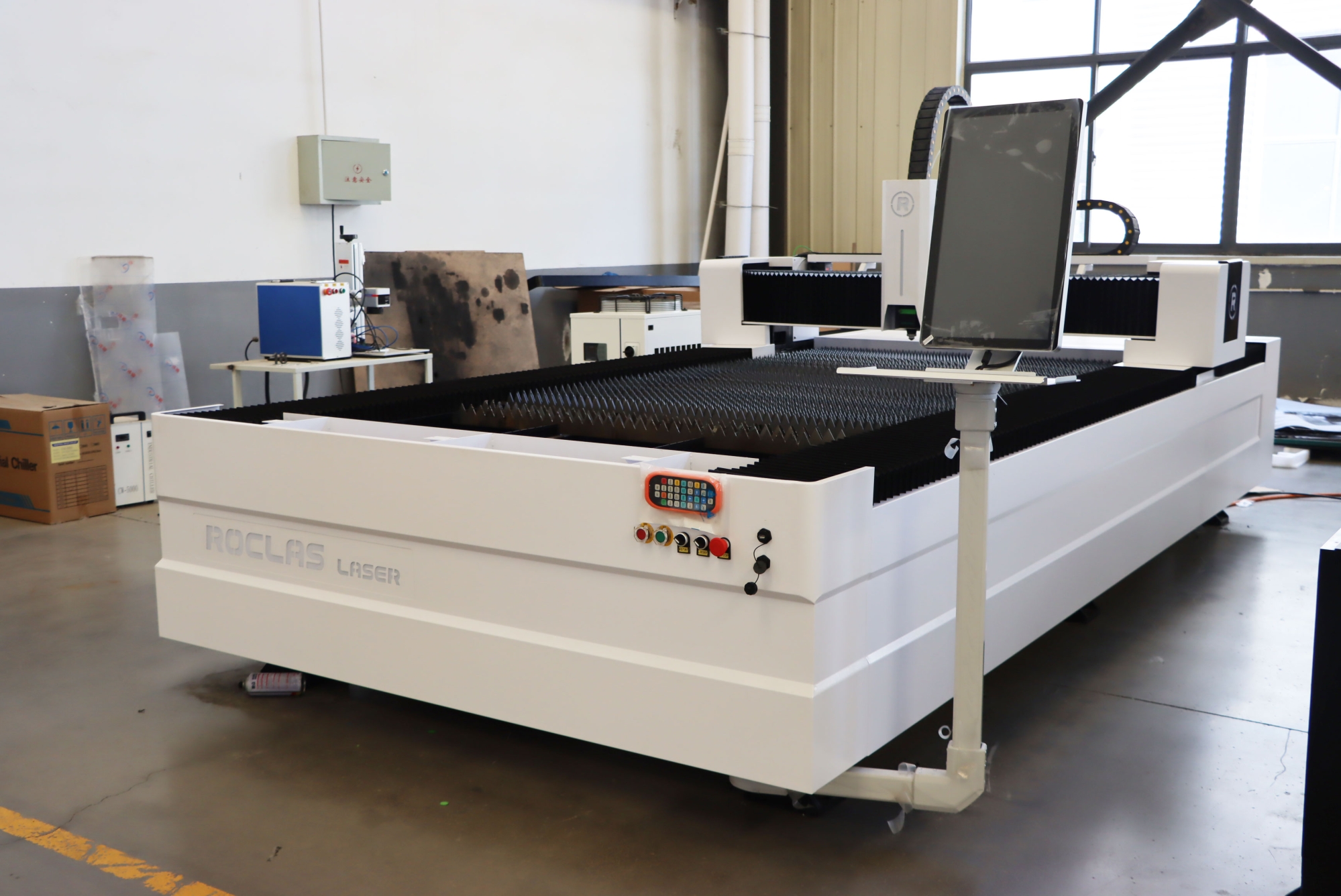
A survey of mid-size fabrication shops in Europe and Asia reveals that while cutting speed (measured in meters per minute) remains a key purchasing criterion, it ranks behind machine uptime, positioning accuracy, and ease of maintenance. This shift is reflected in the technical specifications of leading equipment lines.
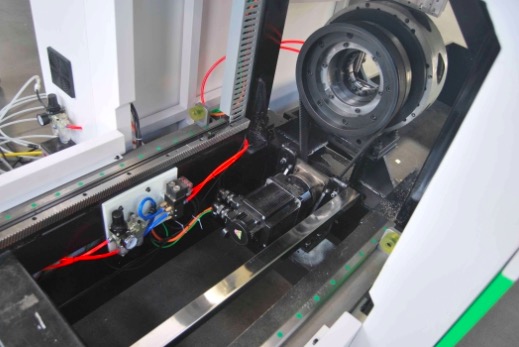
Table 1: Comparative Performance Metrics of Selected CNC Laser Cutting Systems
| Parameter | Entry-Level (1-2kW) | Mid-Range (3-6kW) | High-Power (8-20kW) |
|-----------|---------------------|-------------------|---------------------|
| Max Cutting Speed (m/min) | 25–40 | 40–60 | 60–100 |
| Positioning Accuracy (±mm) | 0.05 | 0.03 | 0.02–0.03 |
| Kerf Width (mm, 2mm steel) | 0.15–0.25 | 0.12–0.20 | 0.10–0.15 |
| Material Thickness Range (mm, steel) | 0.5–6 | 0.5–16 | 0.5–40 |
| Energy Consumption (kW/h) | 8–12 | 15–25 | 35–60 |
| Average Uptime (%) | 85–90 | 90–95 | 92–96 |
| Annual Maintenance Cost (USD) | 3,000–5,000 | 5,000–8,000 | 8,000–15,000 |
Source: Compiled from manufacturer specifications and industry surveys, 2024.
The table reveals a critical insight: while high-power systems offer dramatically higher cutting speeds, the gains in productivity are partially offset by increased energy consumption and maintenance costs. For example, a 20kW system can cut 2mm carbon steel at speeds exceeding 60 m/min, compared to 25 m/min for a 2kW system. However, the energy cost per meter cut is not proportionally lower, and the higher capital expenditure requires higher utilization rates to justify the investment.
Furthermore, positioning accuracy and kerf width—often overlooked in marketing materials—directly impact material waste and post-processing requirements. A machine with 0.02mm repositioning accuracy will produce parts with tighter tolerances, reducing the need for secondary grinding or deburring. This is particularly important in industries like aerospace and medical device manufacturing, where dimensional tolerances are critical.
Technology Application and Brand Case Study
The transition from speed-centric to system-centric evaluation is evident in the product development strategies of established manufacturers. ROCLAS® MACHINERY CO., LTD., a company with over 15 years of experience in CNC and laser systems, exemplifies this approach. Their Fiber laser cutting machines, ranging from 1kW to 20kW, are engineered with industrial-grade heavy-duty steel structures and machined on CNC five-face machining centers. This design philosophy prioritizes structural rigidity and thermal stability—factors that directly influence cutting quality at high speeds.
For instance, the ROCLAS 12000W sheet metal cutting machine achieves a positioning accuracy of ±0.03mm and repositioning accuracy of ±0.02mm, even at travel speeds of 100 m/min. This level of precision is not merely a function of laser power or control software; it results from the combination of a rigid gantry structure, imported servo drives (from Leadshine), and high-quality linear guides. The machine’s ability to maintain accuracy at high acceleration (1.0G) means that the “cutting speed” specification is meaningful only in the context of the machine’s overall dynamic performance.
Moreover, ROCLAS has integrated features that directly address the total cost of ownership. Their machines are equipped with a high-reflectivity suppression
Get a Quote
Regardless of whether you require general advice or specific support, we are happy to help you.
Recent Post
-
 Robotic Arm Laser Systems: Redefining Precision and Flexibility in Industrial ManufacturingAbstractThe integration of robotic arms with laser processing technologies represents a paradigm s...2026-07-06 16:30:57
 -
 The Ultimate Guide to High-Performance Fiber Laser Metal Cutting MachinesIntroductionFiber laser metal cutting machines have revolutionized the manufacturing industry with...2025-06-24 19:56:52
 -
 Understanding the Key Differences Between Fiber Laser and CO2 LaserIn the world of laser cutting and engraving, two types of lasers dominate the industry fiber laser...2025-03-30 09:31:59
 -
 The Ultimate Guide to Programmable Laser Cutters Revolutionizing Precision and EfficiencyIntroductionIn the realm of modern manufacturing and design, programmable laser cutters have emerg...2025-03-29 09:32:00
 -
 The Ultimate Guide to Steel Laser Cutting Techniques, Benefits, and ApplicationsIntroductionSteel laser cutting has revolutionized the manufacturing and fabrication industries, o...2025-03-24 08:31:07
 -
 Why Choose Roclas Fiber Laser Cutting for PED Components?IntroductionLaser cutting technology has revolutionized metal fabrication, offering unmatched prec...2025-06-16 07:49:19